-

Letting the Elephant Dance: Unlocking India’s US$500 Billion Export...
India can significantly expand its goods exports without compromising the gains made in the services sector through tariff... -

Why Do Fewer Women Work in India? A Supply–Demand Perspective
This paper seeks to answer two fundamental questions: 1) What explains India’s low female LFPR relative to its peers?, and 2)... -
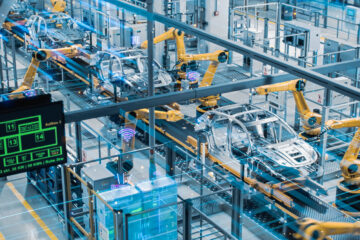
Wheels of Change: Automation in India’s Automotive Sector
This study examines how automation is unfolding in India’s auto-component manufacturing and what it means for firms and workers.
Load More
-
A High-Growth, Low-Emission Pathway for India: Results From REMIND
This study employs a customised version of the REgional Model of Investments and Development (REMIND) integrated assessment model... -
Framing India’s China Strategy on Climate and Clean Energy
Given the tension between the need for sovereignty and continued trade dependence, this paper seeks to provide evidence-based... -

Climate Change and Crop Yields in India
Published by Monash University, this paper presents new evidence on significant effects of climate change on yields across ten...
Load More




Seminar
18
Jun
2026
03:00 PM
-
04:30 PM (IST)
6, Dr Jose P Rizal Marg, Chanakyapuri, New Delhi – 110021

When does privatization of distribution utilities’ management reduce electricity losses? Evidence...
This paper examines the Distribution Franchisee (DF) model, which privatizes management rather than ownership, through a comparative case study of three cities in Rajasthan, India, where the same private firm managed electricity distribution under near-identical 20-year contracts.

The Centre for Social and Economic Progress (CSEP) is an independent, public policy think tank with a mandate to conduct research and analysis on critical issues facing India and the world and help shape policies that advance sustainable growth and development.